Most foreign investors incorporate a sociedad anónima. The legal minimum share capital is Q200.00, but the figure you declare has a direct cost: where authorised capital reaches Q500,000.00 or more, the Commercial Registry charges 8.5 per thousand of that capital, capped at Q40,000.00. You do not need to travel: a power of attorney allows a representative to subscribe shares on your behalf.
Choosing the entity
Most foreign investors incorporate a sociedad anónima, the Guatemalan corporation. It creates a legal person separate from its shareholders, allows shares to be transferred, and is the form banks, suppliers and counterparties expect to see.
The alternative, a sole proprietorship registered as an empresa individual, is cheaper to register but does not separate the owner's personal assets from the business. For inbound investment it is rarely the right choice.
Share capital
The minimum share capital to incorporate a corporation is Q200.00, stated in the articles of incorporation. That is the legal floor, not a recommendation.
Two considerations should drive the figure you actually declare. First, perception: a company with token capital signals little about the seriousness of the project to banks and counterparties. Second, cost: part of the Commercial Registry fee is calculated on the authorised capital, at 8.5 per thousand where that capital reaches Q500,000.00 or more, capped at Q40,000.00.
In other words, declaring capital arbitrarily high has a direct and immediate price.
The process, step by step
- Define the structure. Shareholders, capital, corporate purpose, legal representative. The corporate purpose deserves thought: drafting it too narrowly means amending the deed later if the business expands.
- Execute the deed of incorporation before a Guatemalan notary. Shareholders appear personally or through a representative acting under a power of attorney.
- Register with the Commercial Registry. This produces the company's registration and its corporate licence.
- Issue shares and open corporate books. Share certificates for each shareholder, plus the statutory books the law requires.
- Register with the tax authority (SAT) so the company can invoice and operate as a taxpayer.
Timelines depend on how quickly shareholders provide documentation and on Commercial Registry processing times. We give a realistic estimate once we know the specifics of the structure.
Incorporating without travelling
You do not need to be in Guatemala to become a shareholder. There are two routes.
Before a Guatemalan notary abroad
- Some Guatemalan attorneys and notaries practise in cities abroad
- The instrument is executed under Guatemalan law and in Spanish
- No apostille and no sworn translation required
Local notary plus apostille
- Sign before a notary public in your country
- Obtain the apostille from the competent authority
- If the document is not in Spanish, it must be translated in Guatemala by a sworn translator
Either way, what you are executing is a power of attorney authorising a representative to appear before the notary and subscribe shares on your behalf. The power must contain that specific authority; a generic form usually does not.
Choosing a tax regime at incorporation
One decision taken at incorporation has a lasting effect on the economics of the company: the corporate income tax regime.
Under the profits regime, the company pays 25% on net taxable income, deducting documented costs and expenses. If it reports a loss, no income tax is due. It is also subject to the solidarity tax, a 1% quarterly charge that is creditable against income tax.
Under the simplified optional regime, the company pays 5% on the first Q30,000 of monthly gross income and 7% on the excess, without deductions, and is exempt from the solidarity tax. Tax is payable on revenue whether or not the company is profitable.
The local rule of thumb places the break-even point at a profit margin near 25% of revenue: above it the simplified regime usually costs less, below it the profits regime does. A distribution business with thin margins and a consultancy with high margins should not make the same choice.
The regime can be changed later, but notice must be given to the tax authority in November to take effect from 1 January. Value added tax is 12% in either case. The full picture is set out on our investing in Guatemala page.
Reporting obligations after incorporation
New: beneficial ownership reporting (Decree 15-2026)
A reform that took effect in September 2026 changes what a Guatemalan corporation must report. Decree 15-2026, the comprehensive anti-money-laundering law, amends the Commercial Code and requires every share-capital company to inform the Commercial Registry who its shareholders are.
Three points matter for an inbound investor:
- It applies regardless of sector. A holding company owning a single property is covered just as a financial institution is.
- Beneficial owners must be identified. Anyone holding or controlling, directly or indirectly, at least 15% of participation, or exercising effective control. Where the shareholder is another company, the analysis continues up the chain to natural persons.
- Reporting is ongoing. Companies incorporated after the law took effect must report the first registration of ownership and each subsequent transfer within ten business days.
If your structure involves foreign holding companies, the beneficial ownership analysis should be prepared before incorporation, not after. Our detailed guides on this reform are published in Spanish: guía del Decreto 15-2026.
Common mistakes
- Drafting the corporate purpose too narrowly. Amending the deed later means paying registration again.
- Declaring capital without calculating the fee. The 8.5 per thousand charge surprises investors who picked a round number for appearances.
- Using a generic foreign power of attorney. If it lacks the specific authority to subscribe shares, the incorporation stalls.
- Skipping the corporate books. They are a legal requirement and their absence surfaces at the worst moment, usually during a bank or audit review.
- Registering the company but not the trademark. Company registration does not protect your brand. In Guatemala, trademark rights are obtained principally by registration.
This article is informational and does not constitute legal advice. Every case has particularities that may change the applicable procedure. Before making decisions with legal effects, consult your specific situation with a lawyer.
Frequently asked questions
Can a foreigner be the sole shareholder of a Guatemalan company?
Guatemalan corporations require more than one shareholder. Foreign nationals may hold shares, and there is no general cap on foreign ownership under the Foreign Investment Law. The specific structure should be reviewed for your project.
Do I need a Guatemalan resident as legal representative?
The legal representative may be one of the shareholders, and the appointment is defined in the deed of incorporation. Practical considerations, such as who will sign locally and appear before authorities, should guide the choice.
What is the minimum share capital?
Q200.00 is the legal minimum stated in the articles of incorporation. The amount actually declared should reflect the operation, since part of the Commercial Registry fee is calculated on the authorised capital.
How much does the Commercial Registry charge?
Where the authorised capital does not exceed Q499,999.99, the main items are Q30.00 for issuing the edict, Q200.00 for its publication and Q0.70 per page for authorising corporate books, a figure that combines the Commercial Registry and SAT charges. Where capital reaches Q500,000.00 or more, a charge of 8.5 per thousand of the authorised capital applies, capped at Q40,000.00, plus Q150.00 for registering the first commercial auxiliary and Q100.00 for registering the first business.
Which tax regime should the company choose?
Under the profits regime the company pays 25% on net taxable income and is subject to the solidarity tax, which is creditable against income tax. Under the simplified optional regime it pays 5% on the first Q30,000 of monthly gross income and 7% on the excess, without deductions, and is exempt from the solidarity tax. The break-even point sits at a profit margin near 25% of revenue. The regime can be changed with notice given in November, effective 1 January.
How long does incorporation take?
It depends on how quickly the shareholders provide documentation and on Commercial Registry processing times. We give a realistic estimate once the structure is defined.
Can I incorporate without travelling to Guatemala?
Yes, by granting a power of attorney so a representative appears before the notary and subscribes shares on your behalf. The power must be executed abroad and legalised for use in Guatemala, either through an apostille or before a Guatemalan notary practising in your city.
Does the company have to report its shareholders?
Yes. Decree 15-2026 amends the Commercial Code and requires share-capital companies to inform the Commercial Registry who their shareholders are, including the beneficial owner, defined as anyone holding or controlling directly or indirectly at least 15% of participation or exercising effective control. Companies incorporated after the law took effect must report the first registration of ownership and each subsequent transfer within ten business days.
Does incorporating protect my brand name?
No. Company registration and trademark protection are separate. In Guatemala, rights over a trademark are obtained principally by registration before the Intellectual Property Registry.
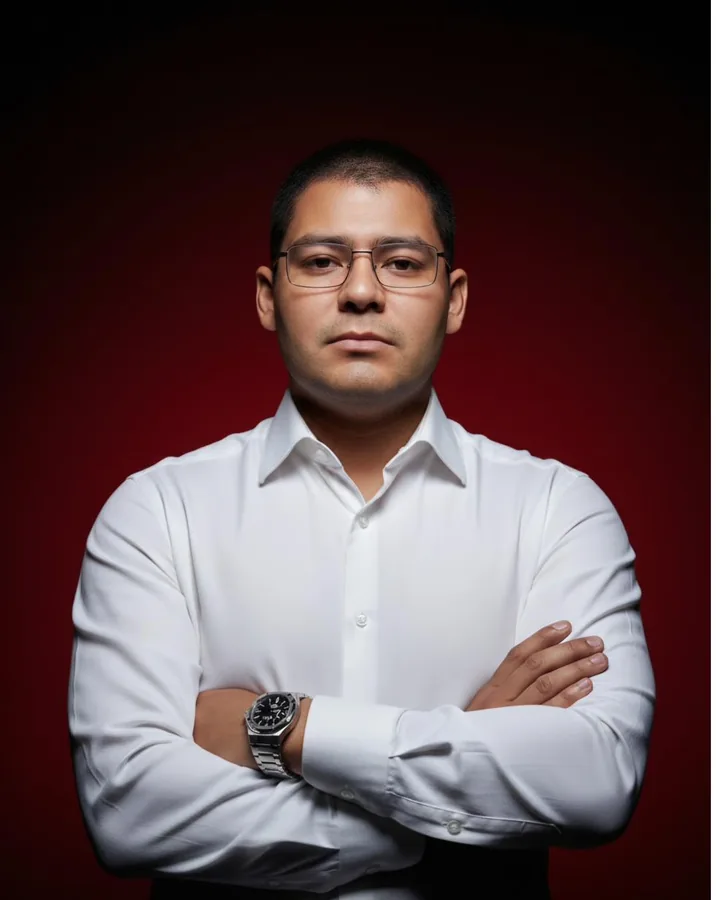
Lic. Sergio Alvarez
Guatemalan Attorney and Notary in active practice, with more than 13 years of experience in notarial, corporate and registry matters. He advises international clients in English and Spanish.